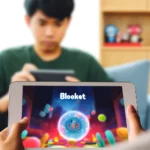


We’ve all heard the phrase, “Don’t play games with your education because it’s your future.” But what if playing games was the new path to education in the said future? In a time when students spend more hours gaming than doing homework, there is a way to harness that enthusiasm for learning.
Game-based learning thus combines the fun of gaming with the rigor of academic activity to make learning more enjoyable. But does this method really work? We will find out soon enough, so keep reading.
What is Game-Based Learning (GBL)?
Game-based learning is a concept that channels students’ enthusiasm for games into teaching. Of course, by games, we don’t mean Bovada esports betting games; that’s too “adult” for them. No, we refer to children-friendly games incorporating engaging learning, immediate rewards, and healthy competition.
This motivates students to learn what they are taught. It also fosters attitudes such as problem-solving, independent thinking, and better imagination.
Don’t Confuse This with Gamification
Note that game-based learning is one thing, and gamification in education is another.
As mentioned earlier, game-based learning involves using actual games to teach students. Simply put, the teacher uses games to represent real-life teaching scenarios so they can better understand the subject.
On the other hand, gamification simply means adding game-like elements like badges and experience points to a non-game lesson. In this instance, teachers reward outstanding students with incentives, such as extra grades, free time, etc.
Types of Game-Based Learning
GBL works for various students regardless of their grade levels. Even if you teach preschoolers, elementary, or high school students, you can use this teaching method if you choose your games carefully. Some common games teachers can use include:
- Board Games: By this, we mean games such as chess, checkers, snake and ladder, etc., that involve the movement of pieces. Students can learn critical and tactical thinking through these board games.
- Word Games: The first game that comes to mind here is Scrabble. Word games like this allow players to improve their vocabulary and language use.
- Card Games: Card games come in varieties; some have a mathematical twist—War. So, why not try this with your students the next time you teach arithmetics?
- RPGs: Role-playing games allow players to assume the role of imaginary characters who engage in adventures. For instance, Prodigy Math, a Massively Multiplayer Online RPG, takes them on adventures. After each adventure, they must correctly answer curriculum-related math questions to reach the next level.
Benefits of Game-Based Learning
Let’s now look into the benefits of this type of education. Here, we will find out if game-based education really improves academic performance:
1. Encourages Problem-Solving and Critical Thinking Skills:
The best classroom games teach students how to solve problems and think critically. With these games, they can learn logic and decision-making and understand causation and analytic reasoning. This method also allows for independent thinking skills.
2. Increases Student Engagement and Motivation:
Studies have shown that teachers who use GBL elements get more attention from their students than those who don’t. Of course, that should be expected. Generally, games encourage students to participate more actively in class, especially when it involves healthy competition.
3. Introduces Situational Awareness:
Learning is not something that occurs only in our heads. In fact, it’s the opposite; education is more or less a simulation of real-life scenarios in a controlled environment. So, when they learn using games, it gives them a better grasp of new contexts in their social interactions.
4. Prompt Feedback:
In a conventional classroom, the best way to determine if the students understand a lesson is to test them with a quiz. However, game-based learning begs to differ because it’s not uncommon to see intelligent students who feel intimidated and underperform in these quizzes. By introducing classroom games, students are more engaged, and feedback is instant.
5. Improved Retention:
Imagine asking a group of students to study a textbook during the summer so they can resume and explain what they learned. If we’re being honest, that sounds a little boring, and we can’t blame students for losing interest and forgetting it all. As such, a proven better approach would be to combine studying with interactive classroom role-playing to help retain information better.
Potential Drawbacks
Almost everything has its pros and cons, and game-based learning is no exception. Depending on the teacher’s approach and the games used, it could result in the following problems:
- Increase in screen time.
- Some games can be more complex than the students’ grade levels, while some may just be a distraction rather than a learning tool.
- It may require a technology learning curve and may not always align with teaching or learning goals.
- Not all students have the same learning pattern, and some games don’t factor this in.
Wrap Up
Ultimately, game-based learning might just be the cheat code education needs. Yes, it should not necessarily replace conventional teaching methods, but it can complement them. Remember, as with all things, balance is key.